Rolling hills, birds, insects and rare plants
Martin Down NNR, on the Hampshire/Dorset border, comprises 350 hectares of unspoilt calcareous grassland and scrub. This type of landscape was once common in the south, but over the years much of it has been lost to building and unsympathetic farming methods.
Martin Down is home to many beautiful plants such as knapweed, scabious, rare pasqueflowers, and orchids: fragrant, very rare burnt-tip, frog, green-winged, and greater butterfly, as well as a variety of insects, birds, reptiles and mammals.
A selection of photos I’ve taken over the years can be seen below.
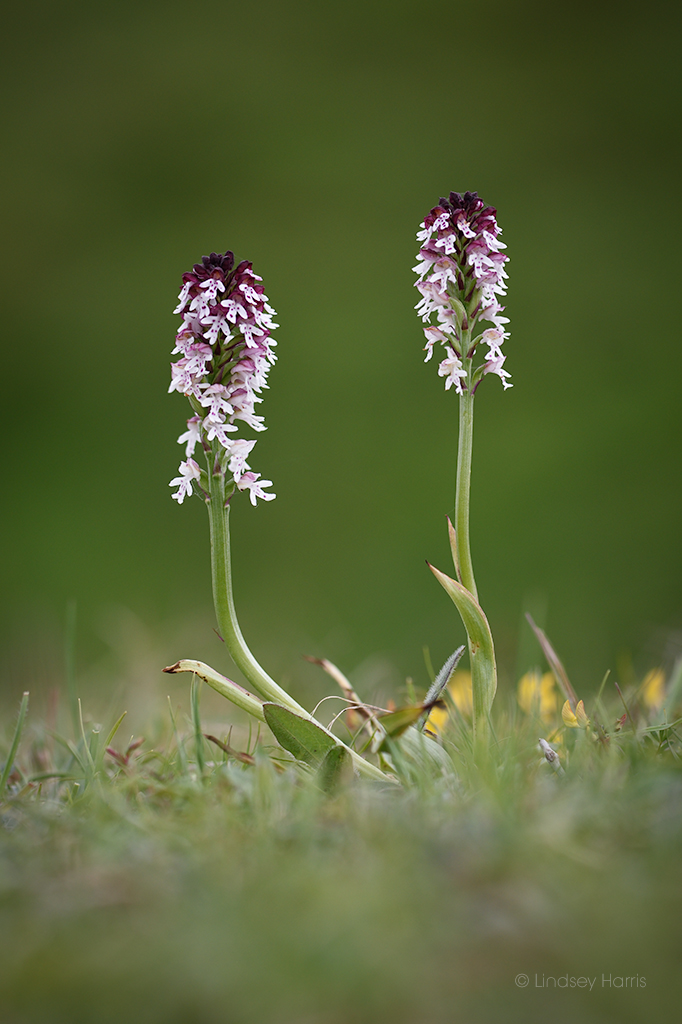
Rare burnt-tip orchids (Neotinea ustulata) at Martin Down NNR.


A rather stunted burnt-tip orchid in 2025.

Adonis Blue at Martin Down NNR.

Mating Brown argus [Aricia agestis] butterflies.

Marsh Fritillary (Euphydryas aurinia) at Martin Down NNR.

A rare pasqueflower enjoying the sunshine.

Looking west from Martin Down.

Frog orchid (Dactylorhiza viridis).


Martin Down’s rare pasqueflowers
For the last few years I’ve been photographing the pasqueflowers (Pulsatilla vulgaris) that grow at Martin Down, on the Hampshire/Dorset border. In comparison to other sites in the UK, the pasqueflower population at Martin Down is tiny. According to BSBI, these particular pasqueflowers were originally thought to be non-native, but it has been discovered that they are genetically similar to other populations in southern England, so they are likely to be indigenous.

Beautiful pasqueflowers in the chalk grassland at Martin Down.
Pasqueflowers are getting harder to find because many of the chalk grasslands in southern England have been turned into farms or built on. The plant needs light grazing and open, calcareous grassland like Martin Down to thrive, albeit only a few pasqueflowers grow here.
There are only 17 isolated pasqueflower colonies in the UK, and only three have more than 10,000 individual plants: Therfield Heath, Hertfordshire; Barnsley Warren, Gloucestershire; and Barnack Hills and Holes, Northamptonshire. Once widespread, pasqueflowers are now classed as ‘Vulnerable’ on the Vascular Plant Red Data List for Great Britain.
I always feel privileged to see the Martin Down pasqueflowers; so happy to know they have made it through to another year.

A pasqueflower waits for the sun as it overlooks chalk grassland at Martin Down.

A tiny, solitary pasqueflower at Martin Down NNR.
Views around Martin Down

Looking from Martin Down towards the west end of the village of Martin, Hampshire.

Looking across Martin Down.

Looking west from Martin Down towards Dorset.


